New Artwork & Educational Resources

Hi all! I’ve been doing some more postings on Instagram and X in order to grow these accounts a bit and document more of my artistic processes. So here are some artwork I’ve been doing in order to get back into drawing manga more.

Most of these are character designs from the upcoming “Sunset Protocol“, which is a 2-volume, self-contained manga story I’m currently scripting. This is a supernatural mystery-thriller manga set in the same location as “The Dreaming” v1-3, and involves Jeanie from that series as a side-character (she is now 27, as it’s 13 years later).

I’ve scripted 9 out of 12 chapters, hopefully done in the next few months, so I’m looking to drop more character art soon.

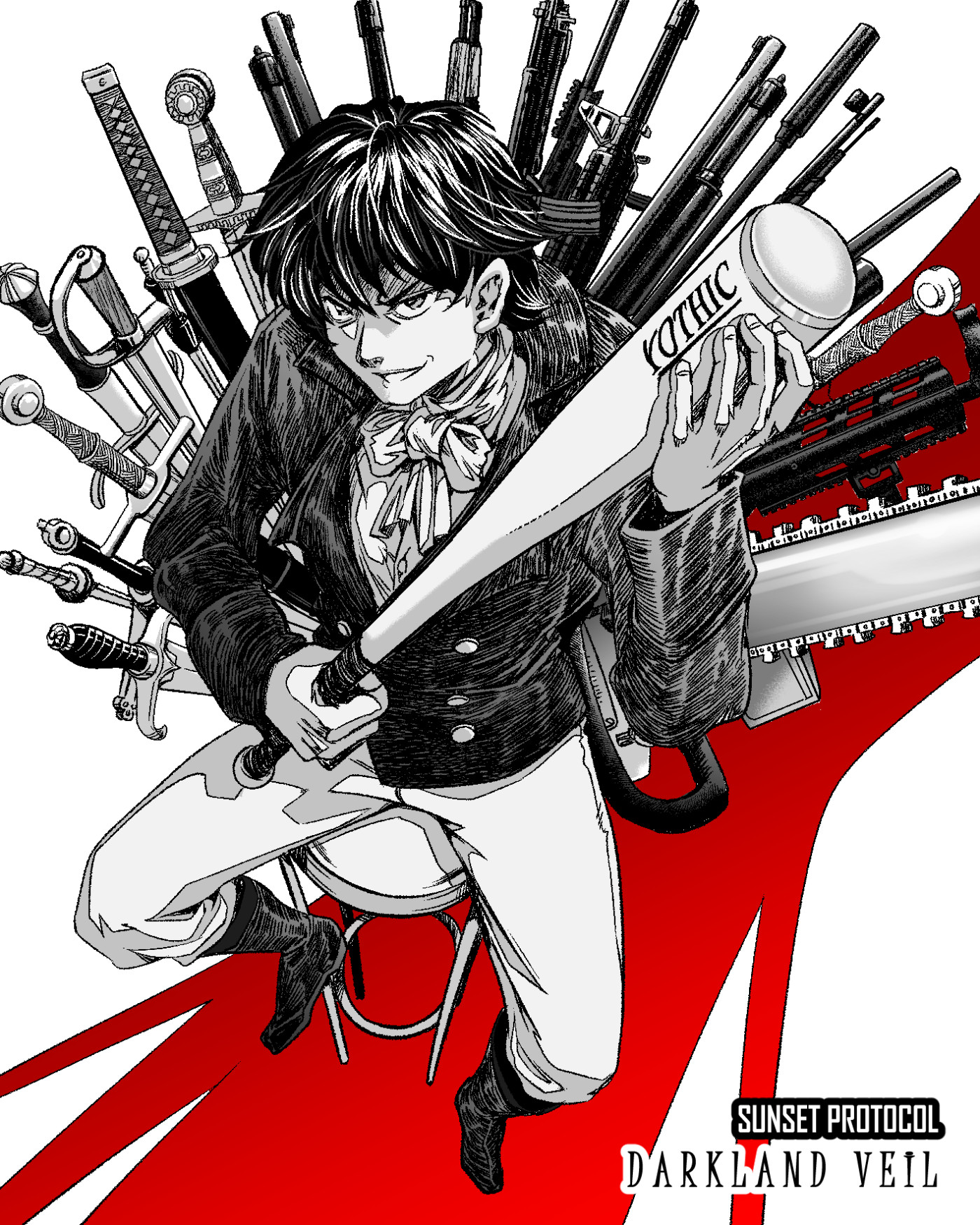
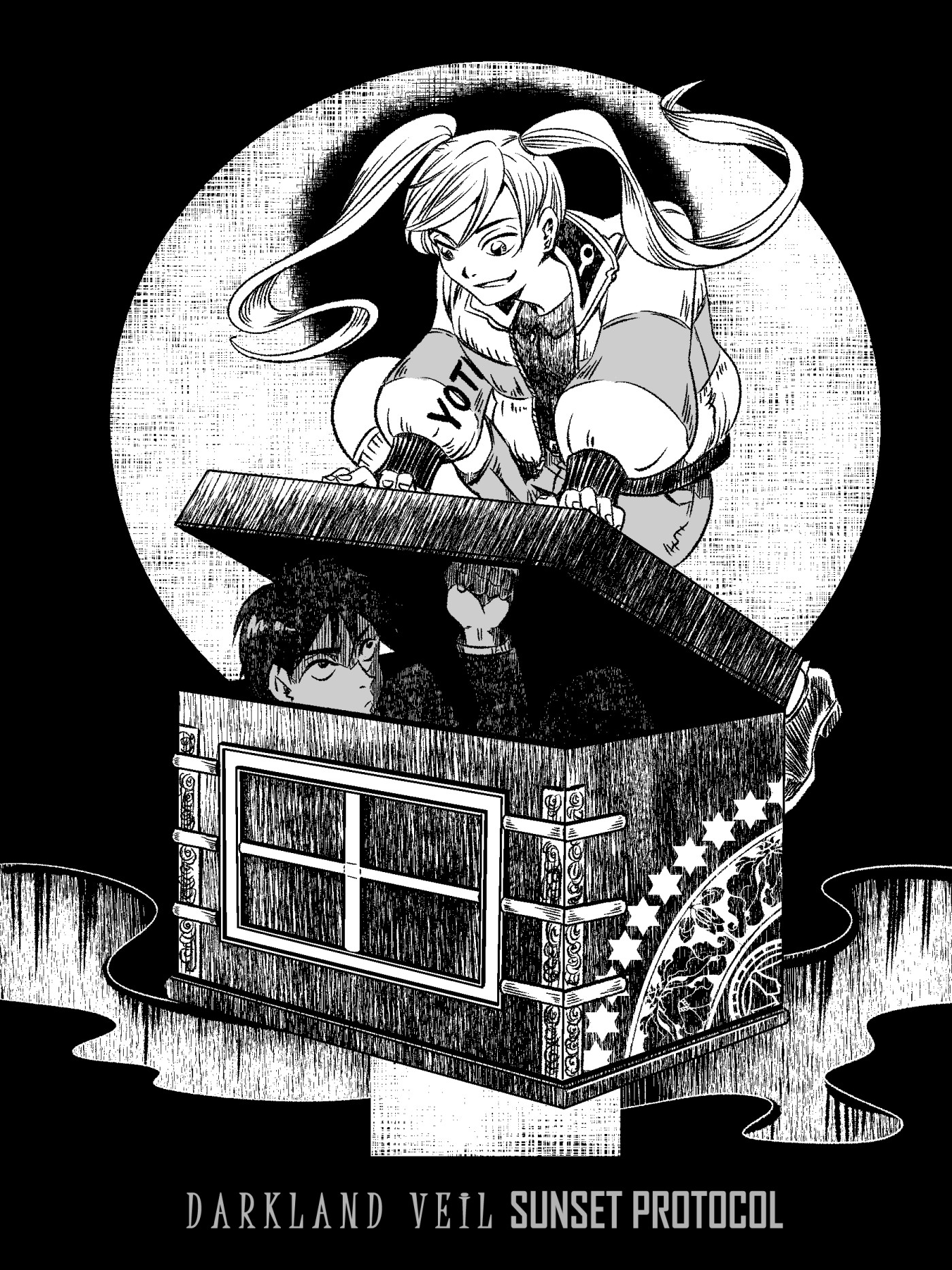
An art test for the character of Eugene from “Sunset Protocol”. The guy’s an unhinged psychic and one of 7 people who is part of the same “found family”, which an outsider (our main character Maddy) runs into while looking for her missing cousin Jeanie (from “The Dreaming” v1-3). I treat these character artwork as a way to hash out these character’s personalities.
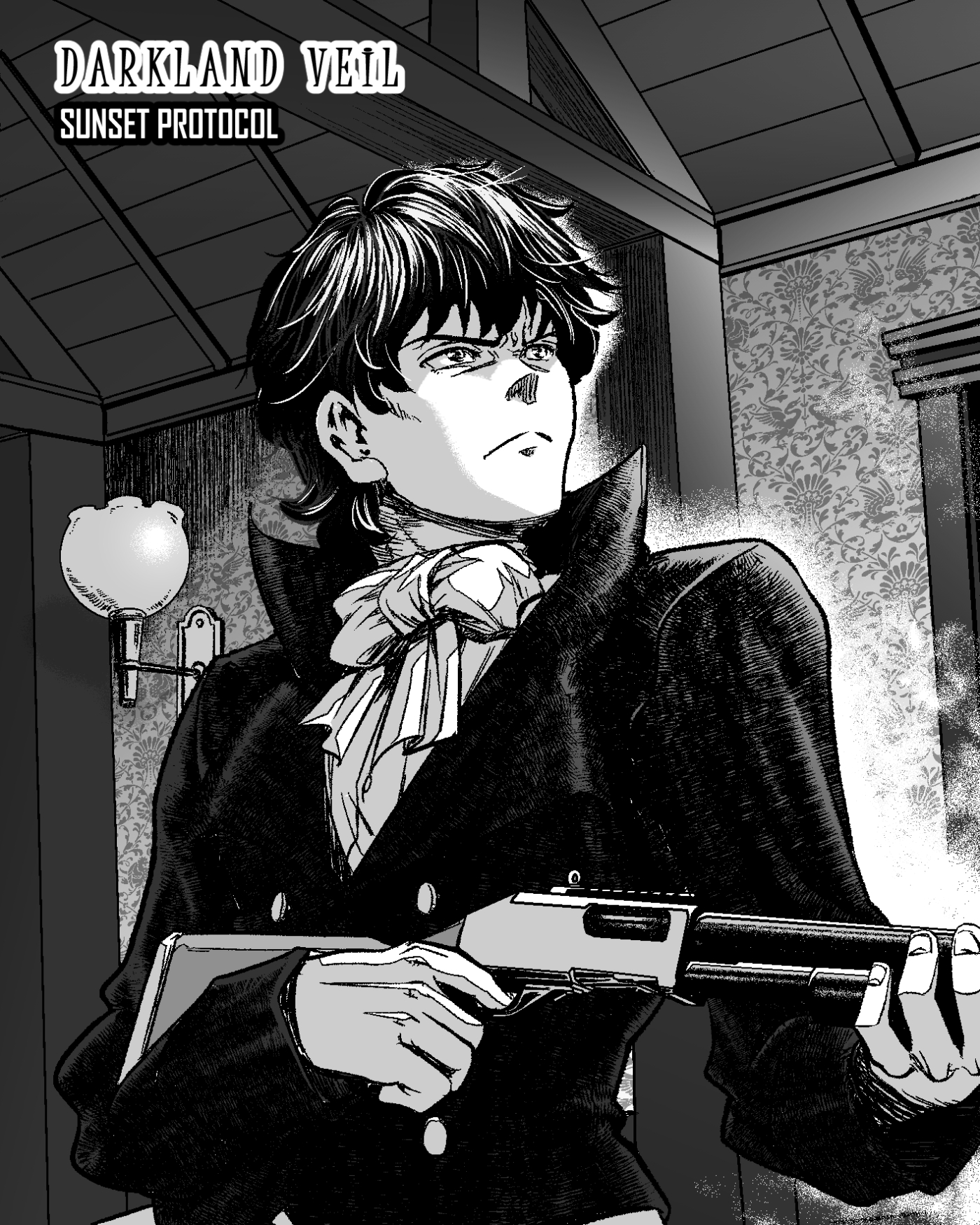
A look at what Eugene would look like in the environment of “Sunset Protocol”. This psychiatric hospital is an exact replica of the school from “The Dreaming”, so much of the decor is the same. This story is partly about a group of family with “found family” dynamics, and they’re pretty strange (there’s a backstory to this), but the way Eugene looks, he fits right in with the setting.
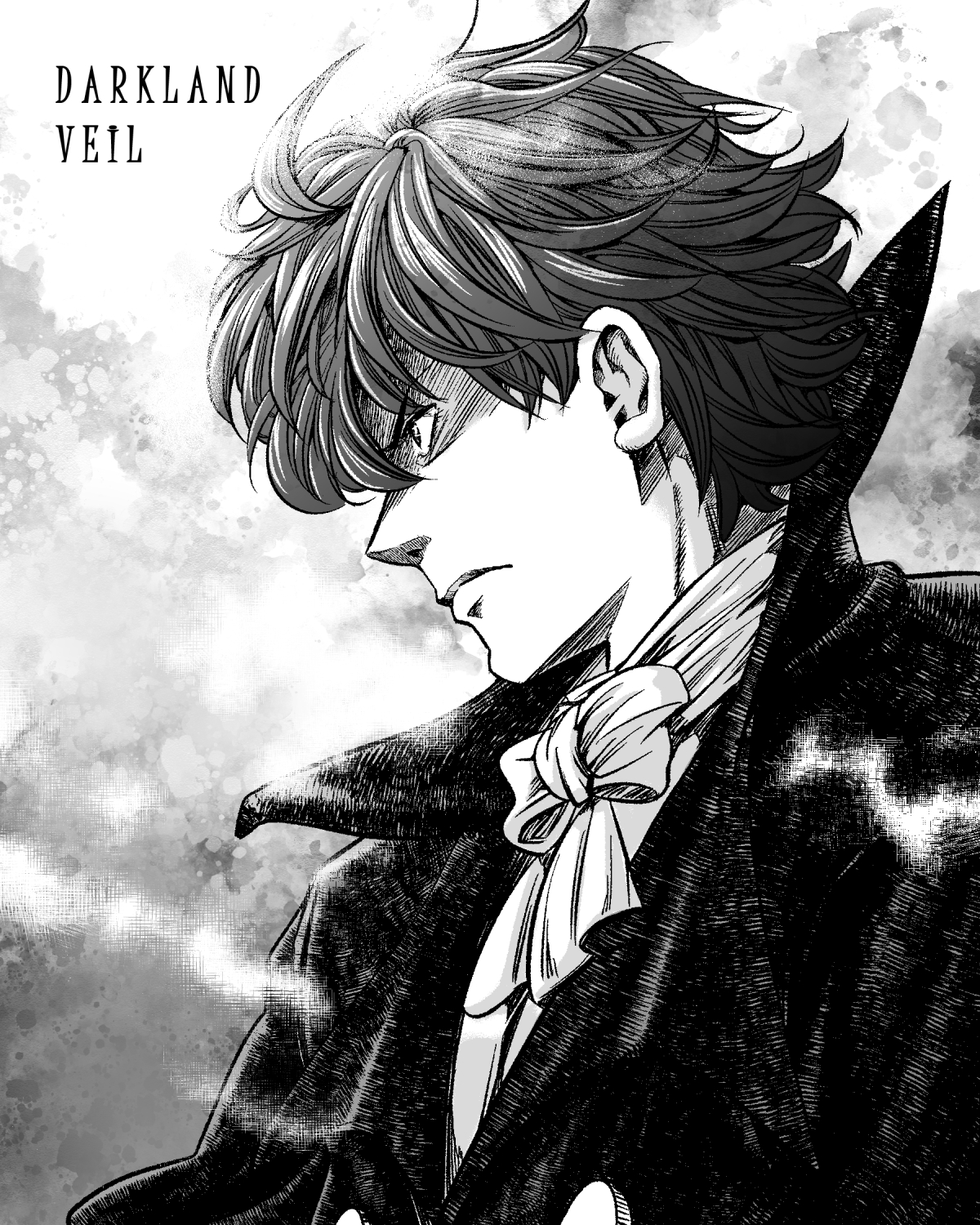
This is Eugene, another character from “Sunset Protocol” that is connected to Alex as a family member though they are not related by blood. Here, I’m testing the “seinen” art style I should use for “Sunset Protocol”. Since the characters are older and have a range of ages, this is a grittier-looking story than “The Dreaming” is. Hence the change in art-style.
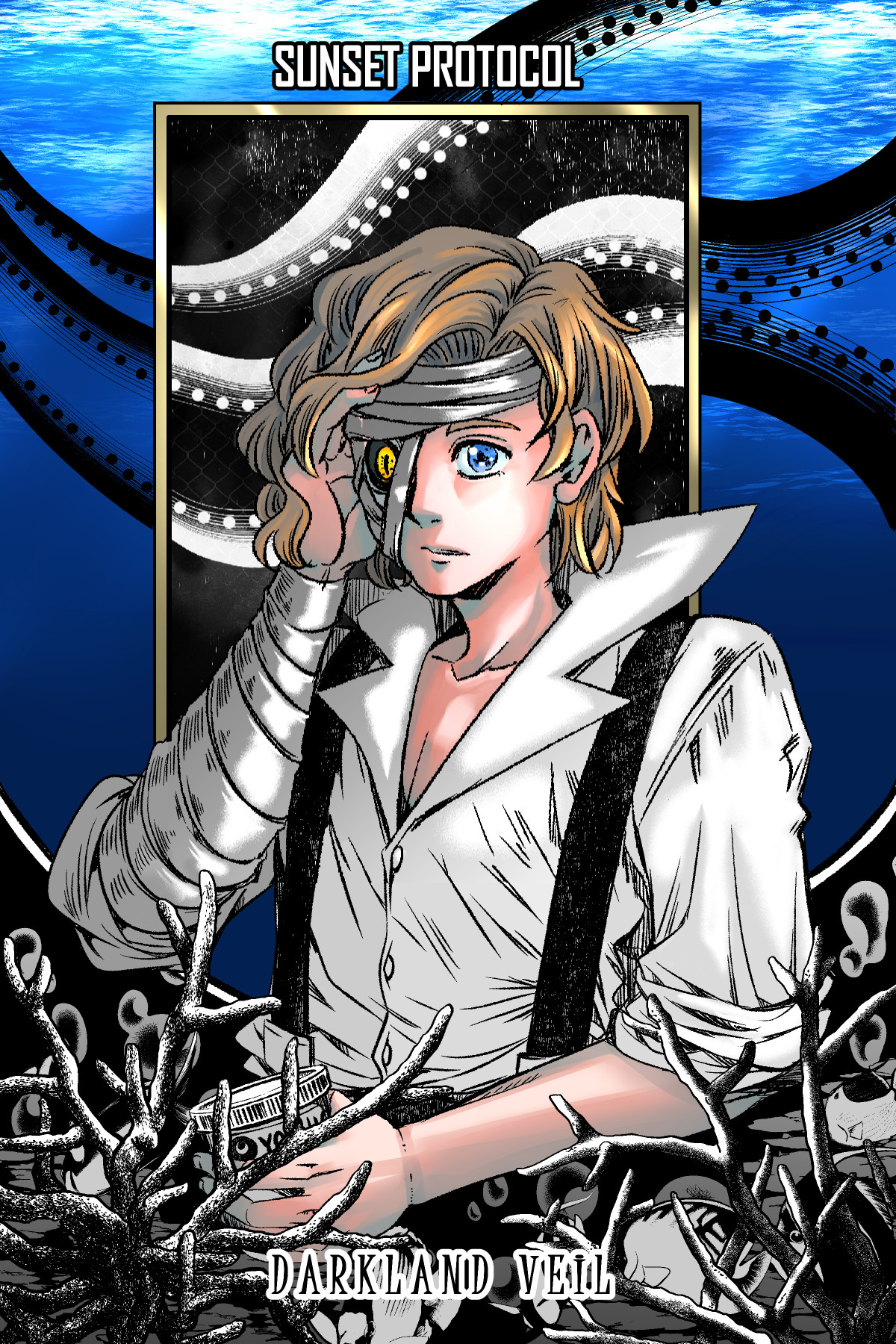
This is an image of Alex. His last name isn’t given, but it’s actually Barrett. He’s the first person Maddy runs into when she goes to the hospital trying to find Jeanie, and yes, his bandages indicate that he is the result of a lab experiment gone wrong.
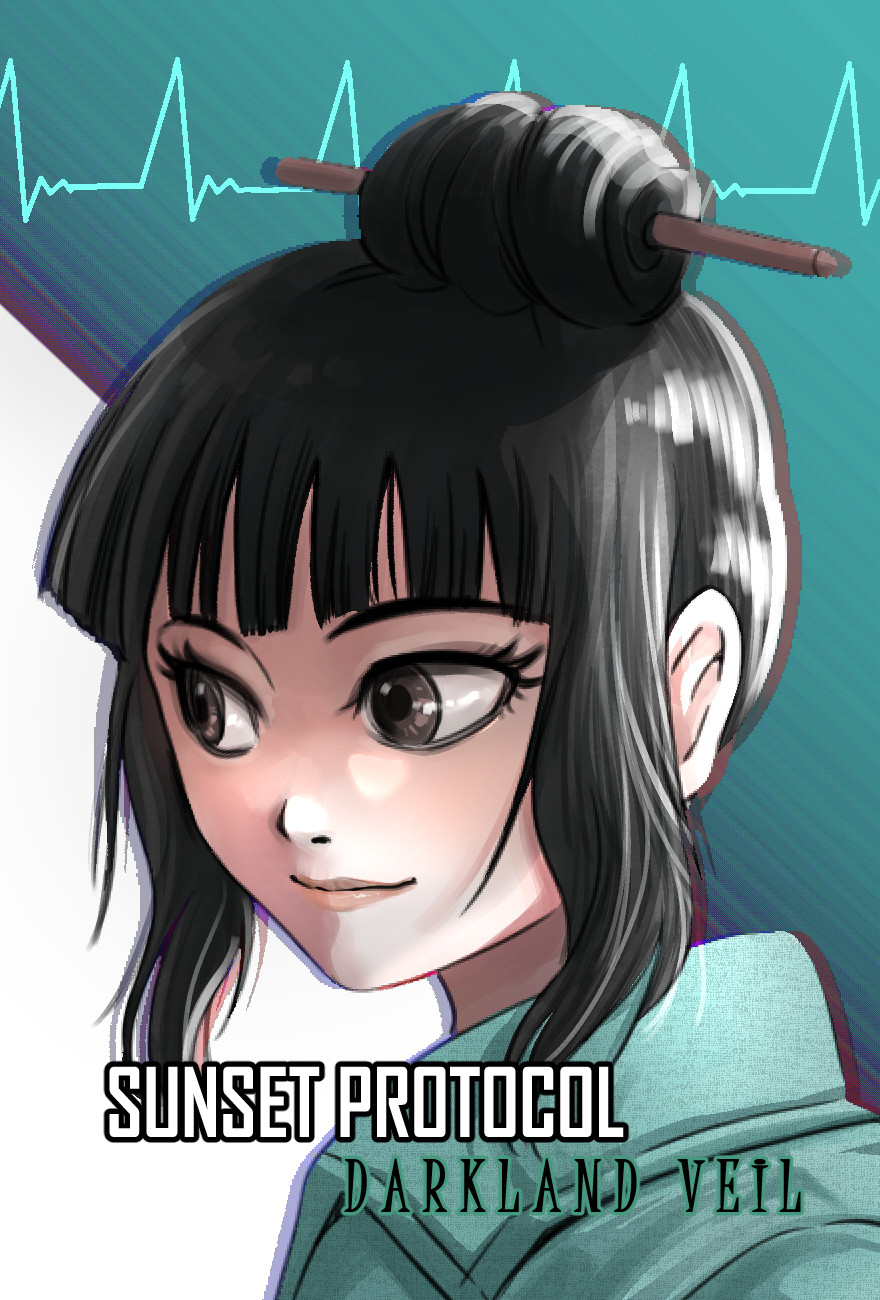
This is Maddy Lim, Jeanie’s younger cousin. She is the de facto main character of “Sunset Protocol” and a nursing student who begins the story looking for her missing cousin. I hope to do more art on her as we go on.
This is Minnie May and Daigo December. They are important characters in “Sunset Protocol” though their real significance aren’t shown until later on.

Firstly, my short story from Walker Book’s anthology “The Book That Made Me: What the Doctor Recommended” has been used as an Educational Resource. It’s is being used as an example of “Hybrid Text” in an English Studies teaching resource for Years 11-12 by the Education Department of New South Wales. Visit the Sample programs and resources in the “Year 11, Term 1 – Reading to write: Transition to English Studies resources” to download the teaching guides.

Those access my story are under the headings of:

  • Phase 3 – Hybrid texts – 11.1 (PPTX 1.7 MB)
  • Phase 3 – Representation – 11.1 (PPTX 3.5 MB)
  • Phase 3 – Sentence variation – 11.1 (PPTX 13.5 MB)

…And so on. Please access via the website links.

Czech version of the “Fabled Kingdom” series v1-3 complete (from publisher Zanir)

I will be eternally grateful to Czech publisher Zanir for translating and producing this beautiful hardcover Czech version of “Fabled Kingdom”, and to the translator for their hard work on what must have been a very difficult title to translate. It’s a comics-prose story, so it couldn’t have been easy. Special thanks to Jan Schejbal for putting all this together, you were a pleasure to deal with!

You can buy the series on their website here: https://www.zanir.cz/bajne-kralovstvi/

FOLIO: Manga Fandom in Australia

Happy New Year, everyone!

I want to let you know about a short comics-prose essay I wrote, called “Manga Fandom in Australia”. Click on the link to read it!

Page 1 of “Manga Fandom in Australia”
Page 2 of “Manga Fandom in Australia”

My essay, which was specifically written in comics-prose format (rather than comics format), is meant to be about the rather the under-documented Australian manga fandom. Why is it under-documented? The essay will explain why–at the end of the day, this country still maintains a fair amount of xenophobia towards Japanese-style pop culture.

This essay is part of a new government-funded Australian Comics academic project called FOLIO, which is spearheaded a group of Comics Studies academics at University of Melbourne, RMIT & UTS. This multi-year project aims to chart the contemporary Australian comics scene, and I hope to incorporate Australian game-comics like “Framed” and “Florence” into it as well in the next few years, which I am currently researching for my PhD.

Short Ghost Stories: The Man with the Axe in his Back

“Short Ghost Stories: The Man with the Axe in his Back” is an experimental book I finished recently, a series of 8 short ghost stories. I first wrote them in proseformat, and then converted half of them into comics-prose. The purpose of this is to explore the best way of creating comics-prose – whether by converting a prose story, or by converting a comics story.

As a result, there are TWO versions of the same book. One with all 8 stories in prose-only format, while the other has 4 of the stories converted into comics-prose. In terms of conversion, it was successful… but ultimately, I found that it’s best to convert a COMIC into comics-prose, as I’ll explain further on in the past.


———————————————————————-
BUY AS EBOOK @ $4.99:
(Discounted to $2.99 until 31st August 2014)

BUY AS PROSE-ONLY EBOOK @ $2.99:

———————————————————————-


Table of Contents

You can sample the stories on my site. I’ll be posting half of the comics-prose stories up on this site, starting in August 2014!


Thoughts on “Comics-Prose”

I’ve learned more about doing comics-prose through doing these stories, and my conclusion is this: Comics-prose is COMICS. I used to think that it’s 50/50 prose-comics, perhaps leaning more towards prose, but I turned out to be wrong. I started doing comics-prose by taking my comics and turning some of the panels into prose, and I find that this is actually MUCH easier than the other way around.

Turning my prose stories into comics-prose was HARD. Perhaps it was the way I write, but that’s why I managed to only turn half the stories into comics-prose. I found that often times things needed to be rewritten, but most of all, redundancies tended to pile up. There’s also this problem I call “prose-picture” tautology, which is where you have a picture of something, followed by prose that describes what happens in the picture, or PART of what happens. This is normal and not completely avoidable, but it seems to happen a LOT more when I converted prose into comics-prose, leading to rewrites.

My conclusion is the comics-prose is actually a form of compressed story-telling in comics. Manga is the ultimate in decompressed story-telling, and oddly enough, this form of comics story-telling is meant to compress manga-style story-telling.


Thoughts on professional copy-editing

I hired a professional copy-editor that works for a large publisher for this project, and while it was an interesting experience, I’m not sure I’ll do it again. It’s not the price, which was reasonable, nor the quality, which was good. It’s because the copy-editor, while managing to spot a few inconsistencies in the stories, also managed to INTRODUCE inconsistencies.

This became a huge problem between the comics-prose and prose-only versions of the story – ultimately, it became hard to reconcile the two versions using the same text. I imagine in the future, the comics-prose and prose-only versions of the same story will HAVE to be copy-edited separately. Which is too much hassle, so I just won’t bother (for now).